
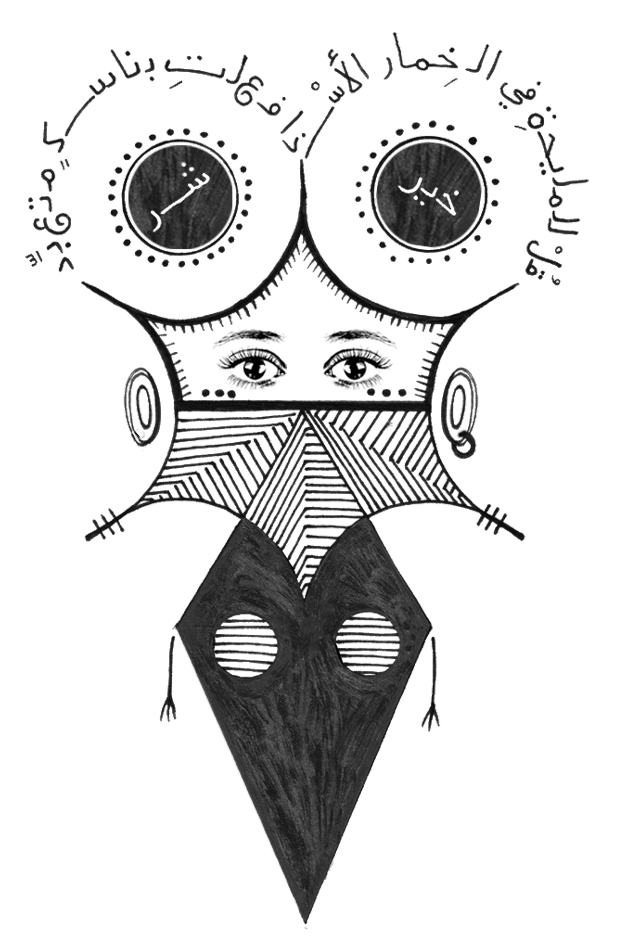
The Story of “Tell the Beautiful Girl in the Black Veil”
In the old days, in the bustling markets of the Arab world, poetry was more than art — it was media, persuasion, and even marketing. A single verse could travel faster than news and influence what people bought, wore, or admired.
In that time lived ʿAbdullah ibn ʿUmar al-Dārimī, a poet once celebrated for his verses, who later abandoned poetry to lead a life of devotion and asceticism.
One day, a merchant arrived from Kufa with boxes of black veils. But black was not in style. Women preferred colorful veils—red, green, blue—and the merchant’s stock sat unsold. Desperate, he turned to al-Dārimī and pleaded:
— “O poet, help me. Say a verse that will make these veils desirable.”
Al-Dārimī hesitated; he had abandoned poetry. But out of pity, he composed lines that would echo through the ages:
Tell the beautiful girl in the black veil,
What have you done to the devout worshipper?He had pulled up his robes, ready for prayer,
Until you appeared at the door of the mosque.Give him back his prayer and fasting,
Do not slay him — for the sake of Muhammad’s faith.
The effect was electric. Sung in the streets, echoed in the markets, the verses spread like wildfire. The black veil, once ignored, was transformed into a symbol of elegance, allure, and even mischief. In those days, veils were not only about modesty — they were part of beauty culture: they kept the skin fresh beneath the sun, framed the kohl-lined eyes, and heightened mystery by concealing just enough of the face.
With poetry as its marketing campaign, the black veil became the hottest fashion. Women rushed to buy them, and the merchant sold out.
As for al-Dārimī, he quietly returned to his prayers, leaving behind a timeless story of how poetry, beauty, and commerce intertwined — proof that even then, poetry could be the most powerful marketing tool of all.
Centuries later, it lived on, becoming even more popular in modern times through the voices of celebrated singers such as Nazim Al-Ghazali and Sabah Fakhri, each giving the verses new life in music and song. This story is an example of a successful trend that outgrew its original commercial purpose to become a lasting cultural meme — one that has carried emotional, romantic, and even mystical dimensions, expressing how love and beauty can sweep away the heart of even the most devout ascetic.
Barakat

 BARAKAT