
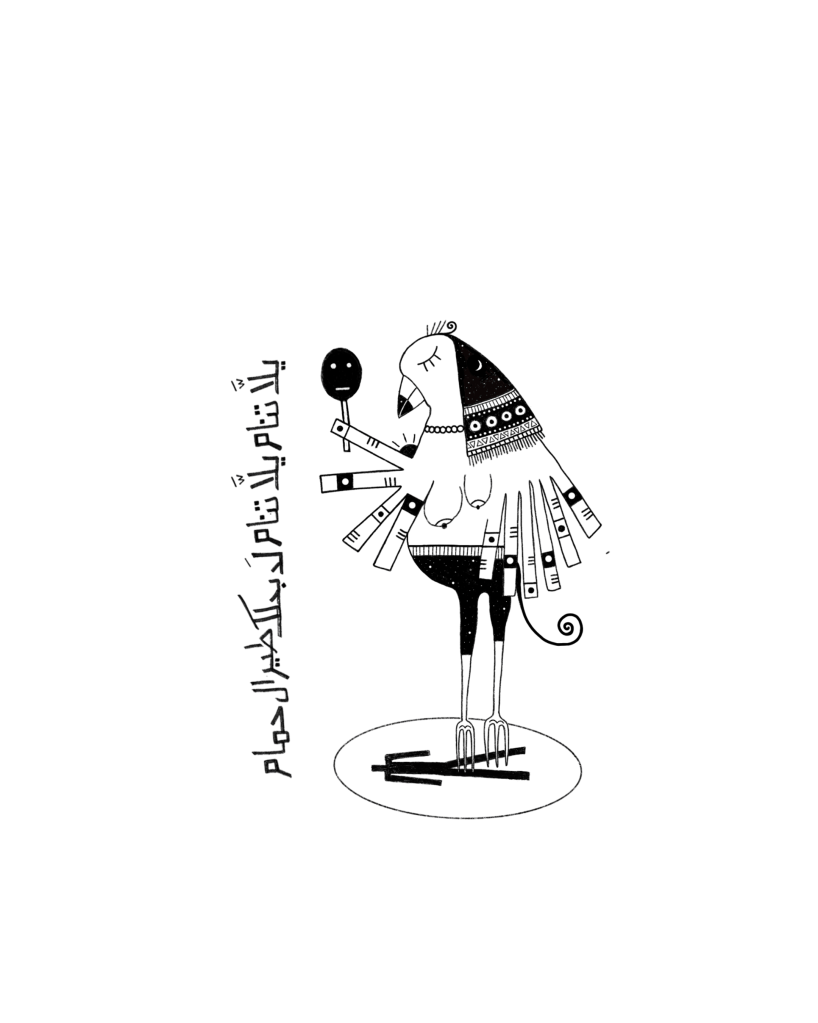
Pigeon Lullaby
“Sleep, O baby, sleep, I’ll slaughter a pigeon for you.”
At first glance, the lullaby “Yalla Tnam, Yalla Tnam, La Dbahlek Tayr el-Hamam” feels unsettling, even harsh. The image of a mother promising to kill a bird for her child contrasts with our modern sense of tenderness.
But in its folk context, this lullaby carries a very different meaning. In the old rural world, where scarcity was the norm, offering an animal was not seen as cruelty but as generosity and sacrifice — a gesture of giving something precious for the comfort of a loved one. The pigeon (hamam), a symbol of beauty and gentleness, becomes here a poetic metaphor for offering, devotion, and care.
*This intention is revealed more clearly in the second line:
“Roohi ya hamam, la tsaddiq, bidhak ʿa Rima ttnaam”
“Go pigeon, don’t believe what I’m saying; I’m only joking so little Rima will fall asleep.”
The words expose the playful tenderness behind the surface severity, showing how mothers used humor and familiar images from rural life to soothe their children.
This blend of apparent severity and hidden tenderness reflects the dual nature of many folk traditions: beneath the surface lies a deep philosophy of love expressed through the language of everyday rural life, where sacrifice and sustenance were inseparable from affection.
Later, the famous Lebanese singer Fairuz reinterpreted this lullaby, singing it tenderly to her daughter Rima. Over time, it became woven into the collective memory of the Middle East, especially the Levant, carrying with it a sense of warmth, safety, and bittersweet nostalgia for generations who grew up with its melody.
Barakat
 BARAKAT